Bruce Larsen – Sculptor, Storyteller, and Healer Through Art
Breathtaking design for home living.
Transforming reclaimed metal into living expressions of motion, history, and the human spirit.
Nam aliquet ante porta, gravida elit interdum, luctus porta sapien justo, at fringilla felis suscipit vestibulum.
About the Artist
Bruce Larsen is an internationally acclaimed sculptor whose large-scale works merge artistry, science, and storytelling. Larsen is best known for transforming reclaimed industrial materials into expressive, life-sized sculptures that seem to move with the power and grace of living beings. His creative process blends mechanical precision with emotional depth, producing works that feel both ancient and alive.
A largely self-taught artist, Larsen’s path was shaped by curiosity and perseverance. “I’ve learned through trial and error—stitches and burns,” he says. “Whatever you love doing—that’s what you were born to do.” In 2009, the United States Sports University and its American Sport Art Museum & Archives (ASAMA) honored Larsen as the Sport Artist of the Year – Sculptor, recognizing his remarkable ability to fuse the strength of sport with the artistry of human motion.

“Everything in life is recycled – the stars, the metal, the water in our veins. We’re all part of the same sculpture.”
Repo Renaissance
For Bruce Larsen, every sculpture begins with exploration. His creative process starts not in a studio but in the field, searching through forgotten workshops, shipyards, and salvage yards along the Alabama coast. He looks not for perfection, but for potential. “I’m drawn to objects that already have a life behind them,” he says. “Metal that’s been used, bent, or scarred are the pieces that tell the best stories.”
His workshop in Fairhope feels like a living archive of history with piles of rusted tools, aircraft components, and industrial parts that once powered ships, cars, and planes. Many of his materials come from a remarkable local source, R.O. “Doug” Douglas, a master machinist from Theodore, Alabama, whose private collection of metals spans more than a century of engineering innovation. Within this collection are pieces from the late 1800s through the World War II era and into the Apollo space race. “Doug was a true connoisseur of metal,” Larsen explains. “When I work with his collection, I’m not just building a sculpture, I’m connecting to a lineage of craftsmanship that shaped the modern world.”
Larsen works intuitively, arranging, balancing, and welding until each piece finds its place. He rarely sketches in advance and instead builds organically, letting the materials speak. He often describes it as a dance between chaos and order, guided by instinct and experimentation. “I think of what I do as a little bit of archaeology,” he says. “I’m uncovering and preserving the last of the pre-digital, pre-robotic world. One hundred years from now, people might not even recognize these objects.”
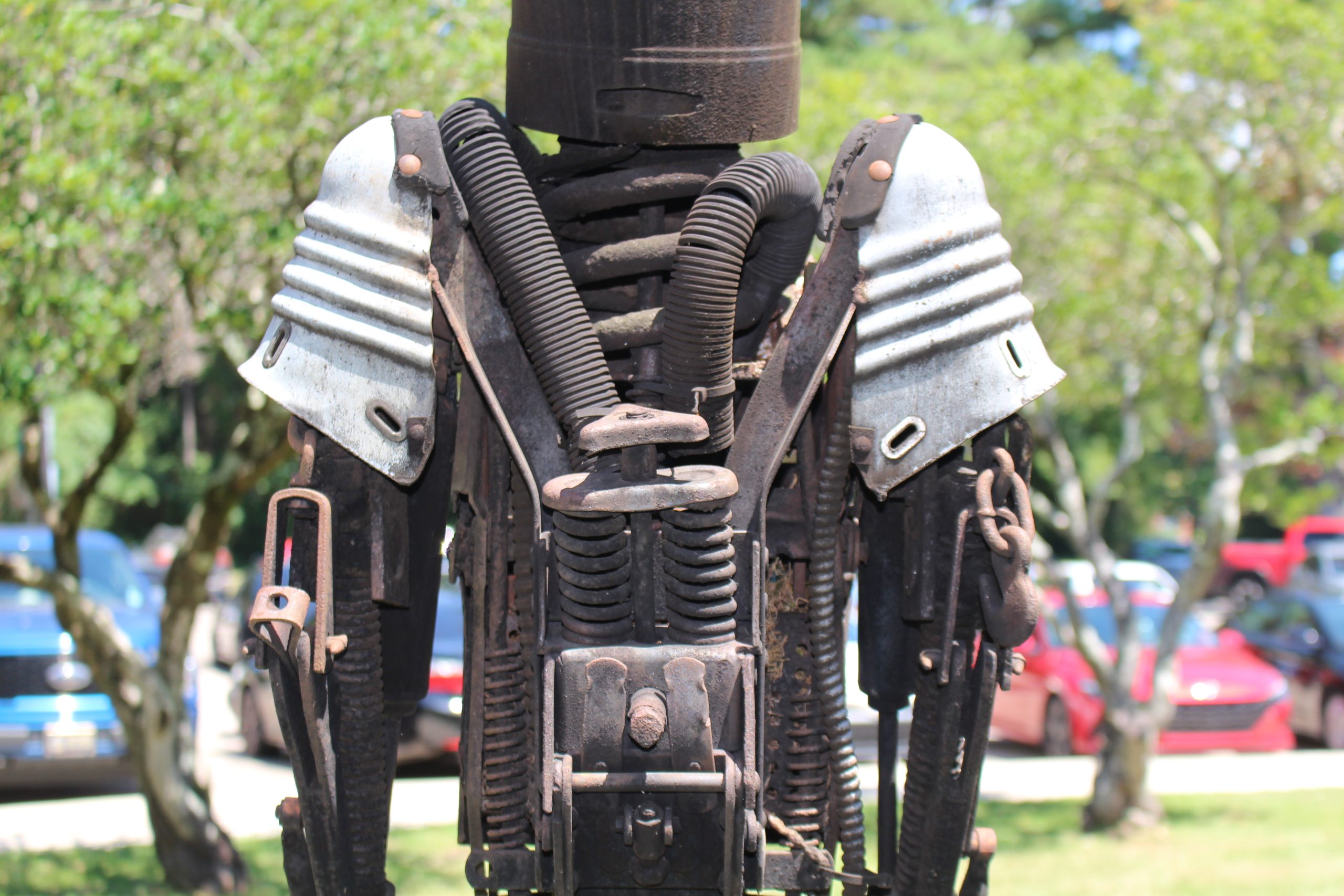
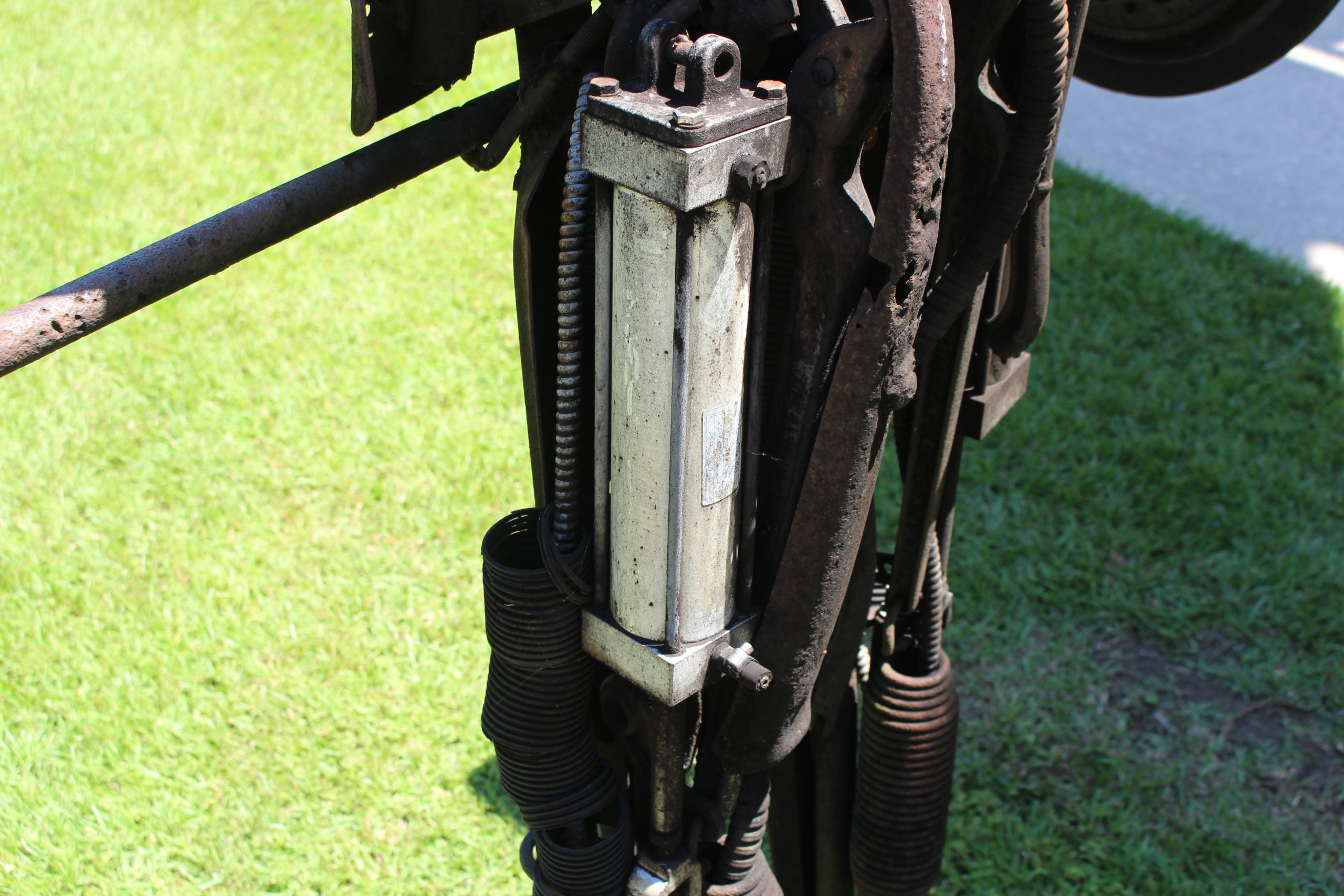
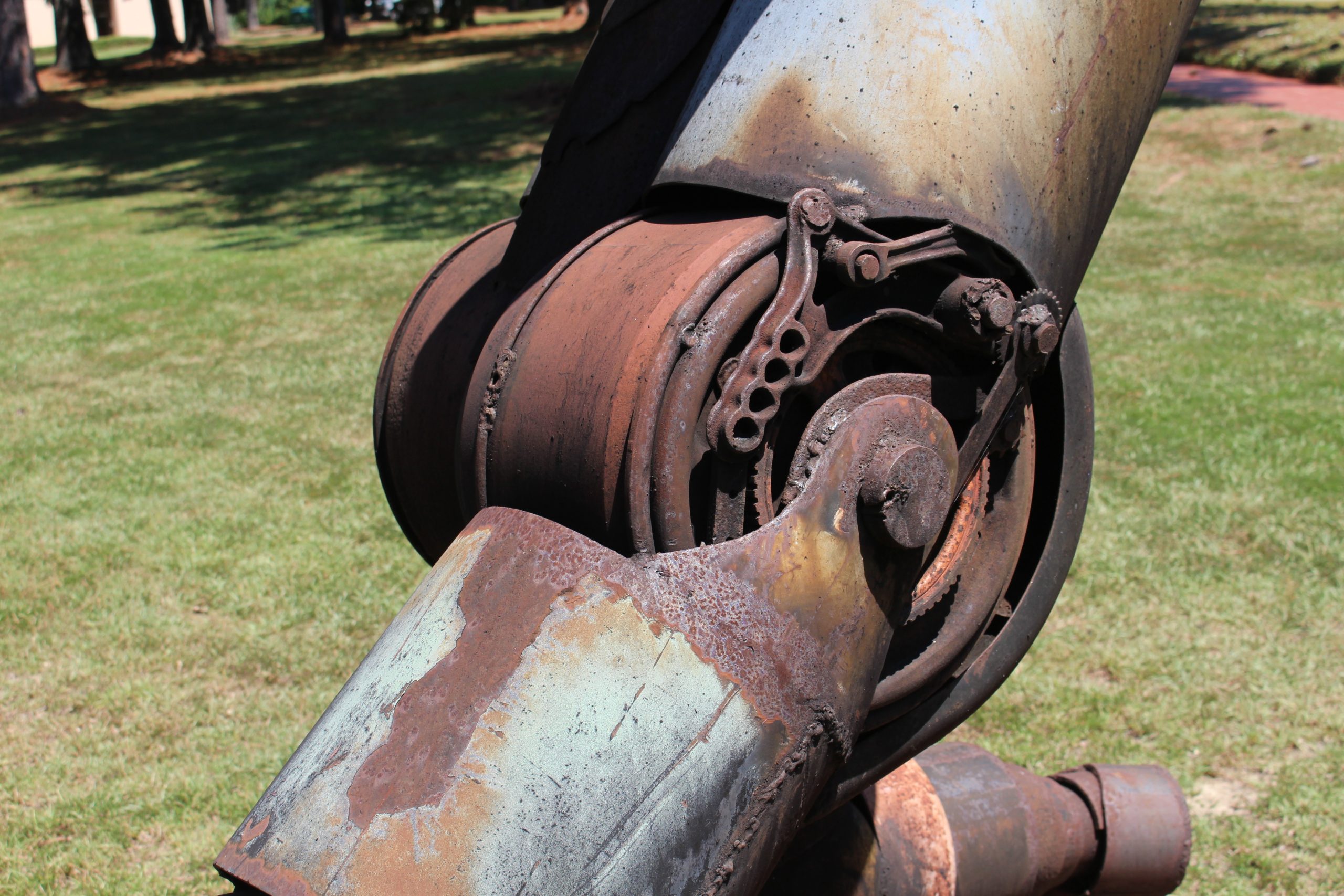
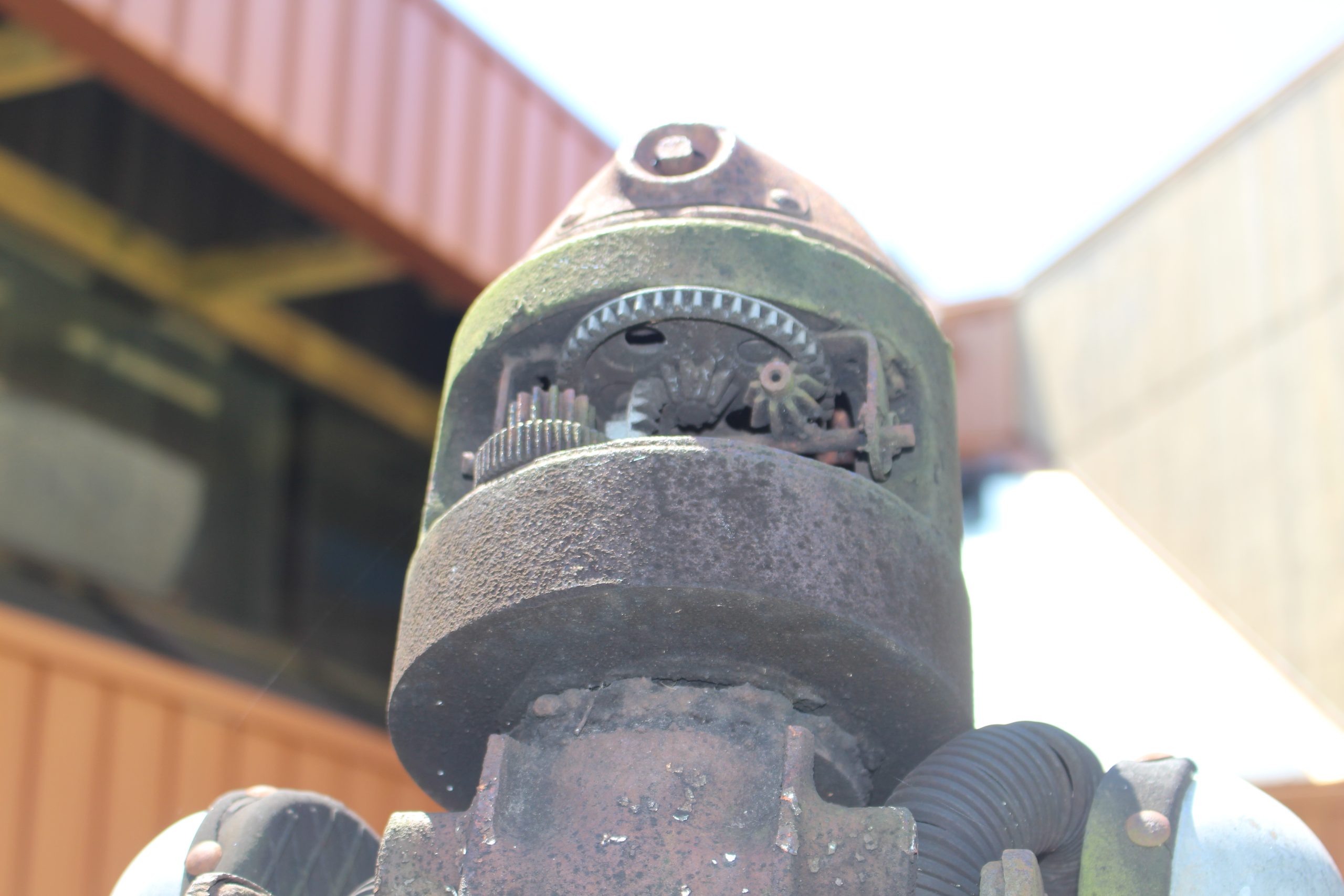
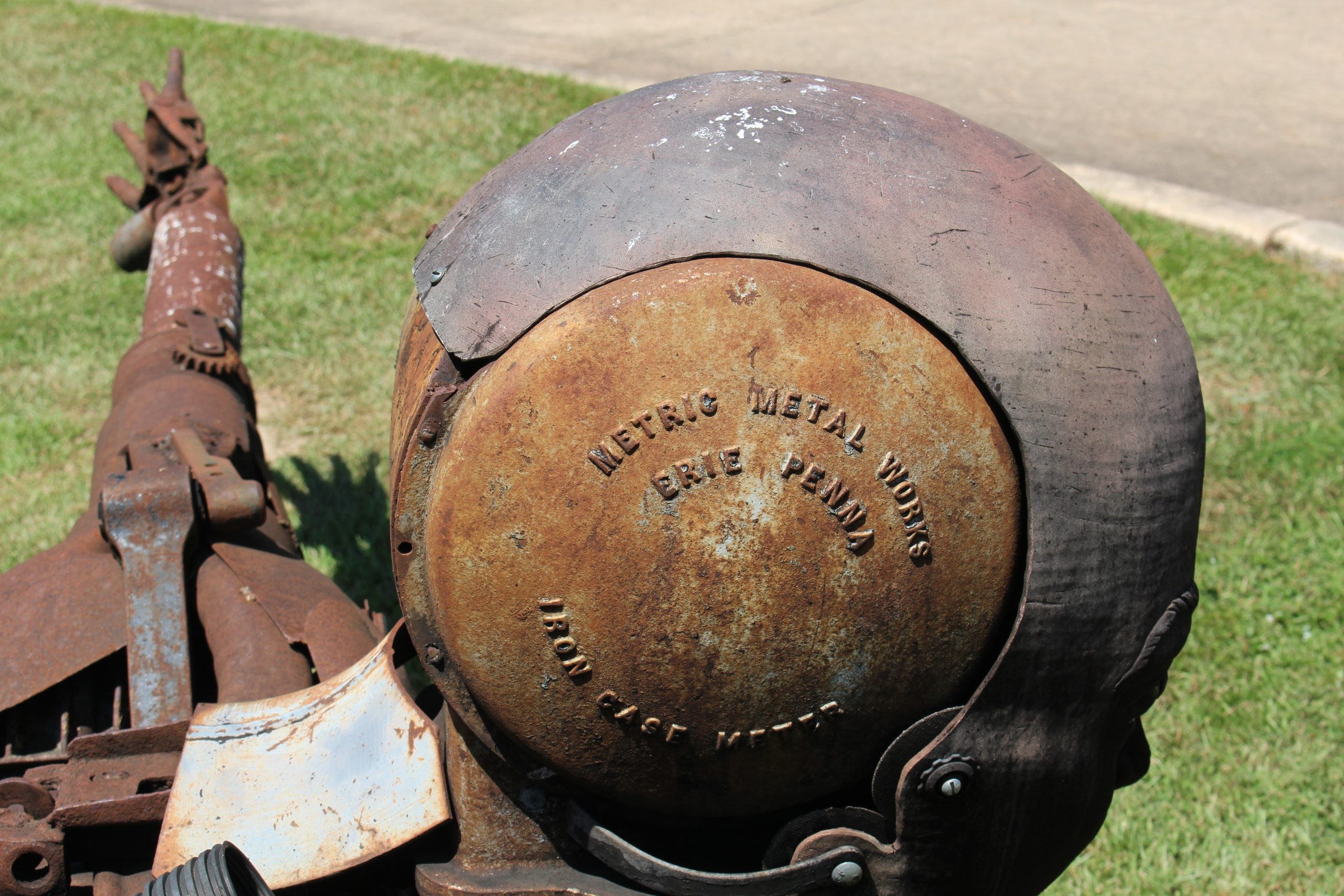
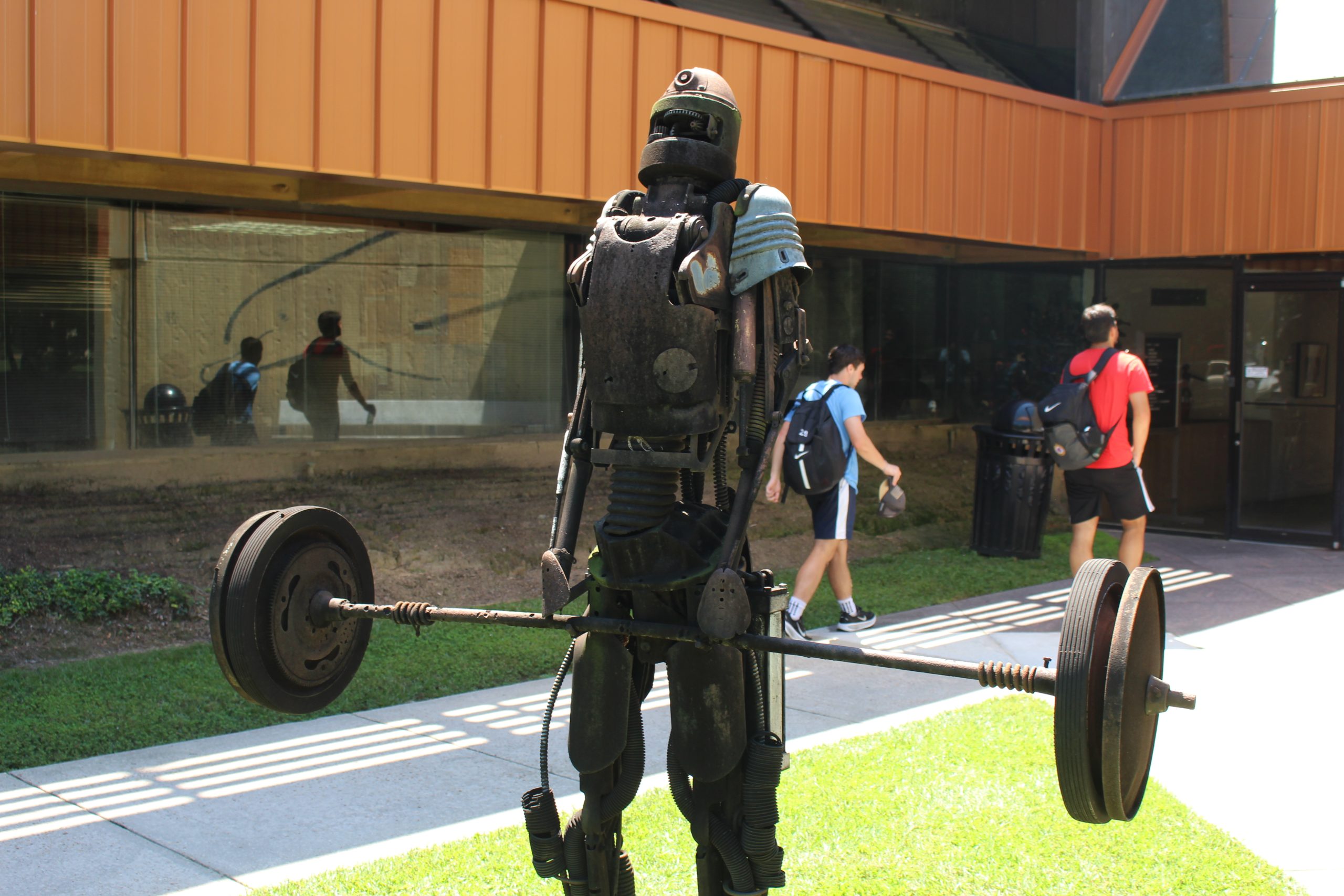
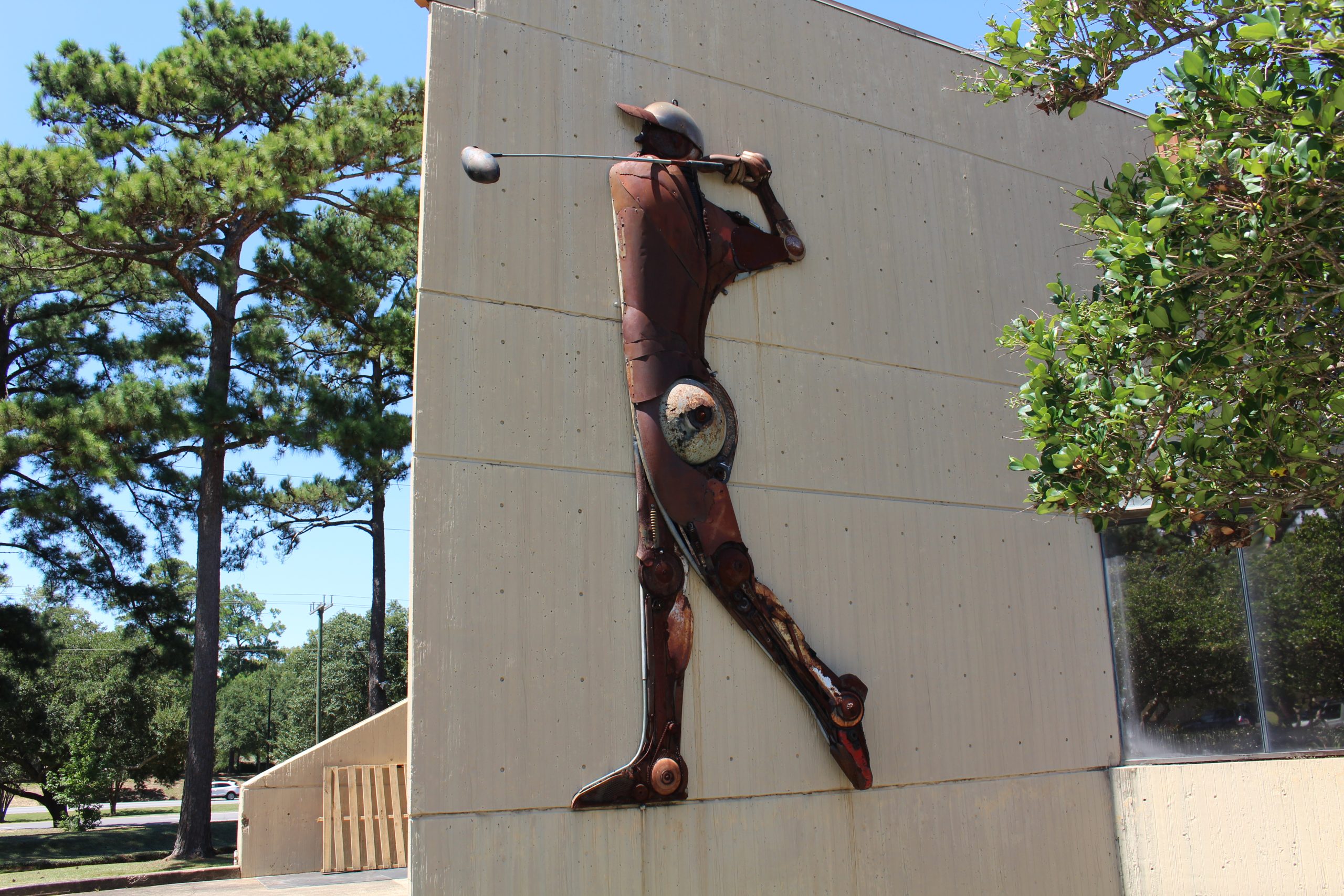
Every weld in a Larsen sculpture carries meaning. Layers of steel and iron form the muscles of a sprinter or the wings of an eagle, symbolizing endurance and evolution. “Everything in life is recycled,” Larsen reflects. “The metal I use once belonged to someone’s work, someone’s hands. I give it another chance to live.” His sculptures remind viewers that beauty can emerge from what has been overlooked and that innovation is as much about rediscovery as it is about invention.







ASAMA and USSU Connection
In 2009, Bruce Larsen was honored by the United States Sports University and its American Sport Art Museum & Archives (ASAMA) as the Sport Artist of the Year – Sculptor for his remarkable ability to express motion, strength, and emotion through reclaimed materials. His work captures the power and perseverance that define both athletes and artists, turning discarded metal into symbols of endurance and beauty.
Larsen’s piece Borzov the Sprinter has become one of ASAMA’s most iconic sculptures. Positioned at the museum’s entrance, it depicts a runner frozen in mid-stride, built entirely from welded steel and mechanical parts. “Since he first put Borzov the Sprinter out front, people have been fascinated by how he takes other people’s junk and turns it into a beautiful piece of artwork,” said Dr. Thomas P. Rosandich, founder of the United States Sports University. “There are always people coming in off the street to photograph his work. They love the energy it captures.”
Through his partnership with ASAMA, Larsen’s art continues to embody the University’s mission to unite sport, education, and creativity. His sculptures stand as lasting symbols of imagination, endurance, and transformation, inspiring all who visit the campus in Daphne, Alabama.
“Sustainability isn’t just about saving materials. It’s about saving stories.”
For Larsen, sustainability is not a trend or a choice—it is the heart of his creative philosophy. His sculptures are built from what others leave behind, transforming discarded and forgotten materials into powerful symbols of renewal. Larsen views every bolt, wire, and piece of metal as a fragment of history, waiting to be reimagined. “Finding and utilizing materials that were destroyed by nature or discarded by society became the driving force of my work,” he explains.
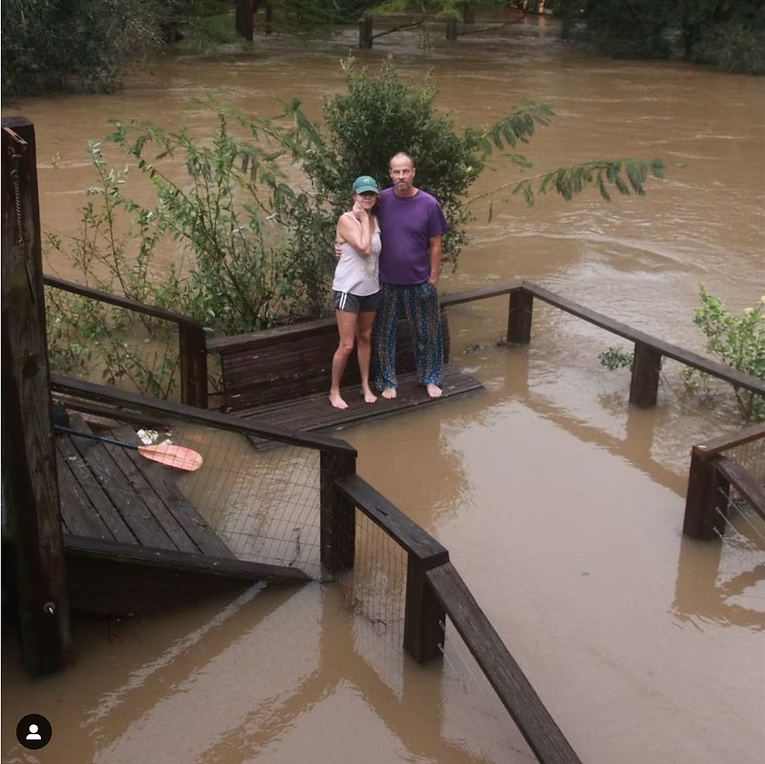
His commitment to sustainability was shaped by personal experience. After Hurricane Danny struck Fairhope, Alabama in 1996, the river behind his home rose more than twenty feet overnight, flooding his property and destroying much of what his family owned. In the aftermath, Larsen began collecting fragments from the wreckage, repurposing the remnants into his first large-scale sculptures. What began as recovery became revelation—the realization that destruction could also spark creation.
Today, Larsen continues to source his materials from the world around him: scrap yards, construction sites, and forgotten workshops across the Gulf Coast. He often drags magnets across debris fields, searching for lost pieces of metal that once held purpose. Through his hands, these fragments are reborn as art that bridges the past and present, reminding viewers that nothing truly disappears—it only changes form.
Legacy and Philosophy
Bruce Larsen’s work is built on the belief that art has the power to heal, connect, and transform. Every sculpture he creates carries a deeper message about resilience, curiosity, and the human spirit. “Life is an adventure, not a game,” he says. “Whatever heals you or your neighbor, that’s what you’re supposed to do.” His art reflects that same spirit of restoration, turning what has been broken or forgotten into something meaningful and alive.
Larsen often describes his sculptures as “visual metaphors for renewal.” By giving new life to materials that once served another purpose, he mirrors the strength of people who rebuild, adapt, and persevere. His works celebrate motion, strength, and grace while inviting reflection on our shared connection to history and the natural world.
Beyond his art, Larsen’s greatest source of pride is his family. He considers his children to be his finest creations, describing them as “tough, independent, and wildly creative.” Their individuality and imagination reflect the same energy that drives his work—the freedom to explore, the courage to create, and the confidence to stand apart.
Larsen’s legacy continues to grow through his sculptures, his influence on young artists, and his commitment to transforming the ordinary into the extraordinary. His pieces remind viewers that art, like life, is an ever-evolving process of discovery and renewal, proving that beauty often comes from the most unexpected places.