Artist archive
Kadir Nelson
Biography
“Sport Art’s Contemporary Griot” – 2009 Sport Artist of the Year
“To perpetuate the African and African-American oral tradition… African storytellers – griots – were the true ‘Keepers Of The Culture.’ Their role as historians of the community helped people maintain a strong, positive sense of self and a clear understanding of the values of the community… The griot presence insured that the history, culture and values of a people would be passed on… to educate and nurture individual and collective self-esteem and foster pride of culture in our community – especially in our children… to restore storytelling to its traditional place of importance in the African-American community.” ~ Keepers Of The Culture; www.angelfire.com

Storytelling in its varied, rich forms is as old as human culture and functions at the core of defining identity and building character in social groups worldwide. In several African traditions, the head storyteller is called a griot and holds a place of affection and honor in the community. The master painter, Kadir Nelson, has a passion for history and a special genius for telling its edifying tales in his artworks.
“I want to tell stories…I want to honor these men and the history they created… What I try to do is bring these subjects to life.” ~ Kadir Nelson; www.kadirnelson.com

Before they become immersed in the visual stories being told, viewers of Nelson’s paintings may be swept into contemplation of several other signature aspects of his work that can dominate one’s attention at first glance: the highly cultivated draftsmanship that verges on photo-realism; the frequent penchant for elongating areas of the human body to emphasize movements or moods; the cool, airy color palette that mirrors Nelson’s Pacific coast atmosphere; the sense of internal calm amid chaos that permeates even the busiest of his scenes; the striking structures of each character’s actions that give the finished image the unmistakable look of a freeze-frame camera shot. All these aspects are important and contribute to the paintings’ impact. However, the subtle elements of Nelson’s visual storytelling are what give the works their most enduring cultural power as well as profound emotional value.

After catching the breath from wonder at the technical skills displayed in Nelson’s paintings, viewers next can focus on the intricacies of the stories spread out before them. Each baseball or basketball player, each coach, young fan or mature spectator painted radiates with individuality and a sense of personal history that draw the viewer into the picture’s world. Though Nelson covers a wide variety of subjects, from Abraham Lincoln to singing animals, in his artworks, he is best known for his portrayals of sports scenes and athletic icons. In a change from the magazine’s standard placement for non-athletes’ photos, Nelson was even pictured on the cover of Sports Illustrated when his paintings appeared in an article in the issue.
“Not too many people get on the cover of Sports Illustrated without scoring a point!” ~ Kadir Nelson, Voice of San Diego, April 1, 2008

Nelson’s tour de force, seven years in the making, is his combination of dozens of illustrations from a series of large original oil paintings plus written text titled, We Are the Ship: The Story of Negro League Baseball. There were superstar caliber athletes in Negro League Baseball, but relatively few people knew of them because of the segregated social and sports policies of early to mid-20th century America. Nelson’s book corrects the record, tells their stories, and inspires thousands of people today. Published in 2008 in the category of children’s literature, the work was recognized for its significance beyond the scope of most youth books and became a New York Times best seller. In 2009, the book gained Nelson the Coretta Scott King Book Award and Illustration Honor, the NCTE Orbis Pictus Award, and the Sibert Medal.
“Author-illustrator Kadir Nelson’s text is so engrossing – and his oil paintings so evocative – that the rubric is inadequate. Nelson’s soulful work about this long-neglected brand of our national pastime… demands an all-ages audience.” ~ David Davis, ‘Stepping Up to the Plate,’ Los Angeles Times, March 30, 2008

Nelson’s passion for painting began when he was very young. Nelson believes, “I have always been an artist. It’s part of my DNA”(www.kadirnelson.com). Encouraged by an uncle who was an artist, Nelson determined to become a professional painter. After high school, Nelson won a scholarship to train in art at the prestigious Pratt Institute in Brooklyn. While a student there, he was commissioned to paint legendary athletes, Satchel Paige and Josh Gibson. Doing the research for this work led him to discover the stories of Negro League Baseball and the hardships and triumphs of the dedicated players during the 1920s to the 1940s.
Hollywood producers, Steven Spielberg’s Dreamworks studio recognized Nelson’s talent for historical illustrations when they hired him for major visual development work on the 1997 movie, Amistad. The film tells the story of a group of slaves shipped to America who succeeded in gaining the right to return to Africa. Nelson illustrated the film’s companion book. The studio also hired him to work on the animated film, Spirit.
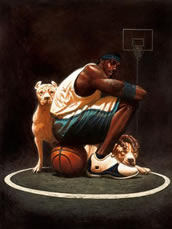
In 2008, Nelson’s oil painting, Anatomy of Team Handball, won the top graphic award in the sport art competition co-sponsored by the United States Olympic Committee and the United States Sports Academy. This painting went on to win another international competition for display at the 2008 Olympics in Beijing. Nelson has designed stamps for the U.S. Postal Service, including one featuring a majestic portrait of Anna Julia Cooper, a feminist and scholar, as part of the 2009 Black Heritage stamp series, and a double stamp featuring Rube Foster, founder of the Negro National Baseball League, released in 2010.
Nelson’s artworks are held in many galleries, museums, and private collections and have attracted an impressive clientele list that includes Will Smith, Spike Lee, Denzel Washington, Queen Latifah, Venus Williams, and Shaquille O’Neal.
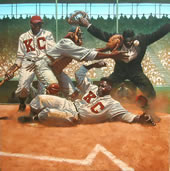
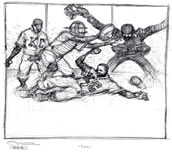
A groundbreaking painter and born visual storyteller, this contemporary San Diego griot mines the richness of his artistic DNA to capture some of the most iconic images of the most overlooked as well as the most famous historic moments in American sports in his unique and masterful style. If a picture communicates a thousand words, then each of Kadir Nelson’s remarkable works of visual history is a tapestry that tells a thousand stories for us all to learn from and enjoy forever.
Style & Inspiration
Kadir Nelson – “Sport Art’s Contemporary Griot” – 2009 Sport Artist of the Year
“What moves men of genius, or rather what inspires their work, is not new ideas but their obsession with the idea that what has already been said is still not enough.” ~ Eugene Delacroix (1798–1863); Artist to Artist, Jackson Creek Press, p.126

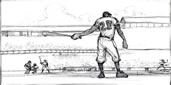
Nelson may paint scenes from bygone eras, but his style is fresh, contemporary, and Pluralist, combining the best of classic, modern, and contemporary art styles to convey his visual stories. The inherited art gifts in his DNA include the rich art of storytelling. Nelson’s exceptional work as a book illustrator is a natural branch of his narrative painting style. As if absorbed by association with his California environment, several elements distinctly characteristic of West Coast art styles are prominent in Nelson’s works: the luminous tones of his colors, reminiscent of Maxfield Parrish; the pioneer loneliness of the vistas, reminiscent of Thomas Hart Benton; the sense of calm even in scenes of great action, reminiscent of Asian masters such as Hokusai and Gu Gan; the representational images used in the service of allegory, much as the sublime Symbolists did; the distortion of natural anatomy and color in the service of mood and message, as Expressionists encouraged.
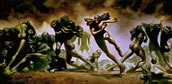
When considering style, it is as inevitable as it is mistaken to equate Nelson’s images with Ernie Barnes’ memorable characters. If a viewer starts to dismiss Nelson as merely a disciple of the great Barnes, then the mastery of Nelson’s works is missed. That would be a great loss because along with a unique style, Nelson has many crucial and poetic things to say in his paintings about the place of Black athletes in history and the relevance of their heritage for society today.
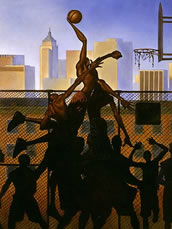
In a surface stylistic similarity, both Barnes and Nelson employ elongation of the human form in their paintings to communicate striving – but for very different goals. Barnes’ players are striving for group uplift. Nelson’s athletes seem to struggle on individual journeys over their personal lots and psyches. Compare Sugar Shack by Barnes with David and Goliath by Nelson. Barnes’ characters function together, united and urgent as a bee swarm, swirling across the canvas to find their place as a group in the world. Nelson’s athletes stand lonely, isolated even in a crowd, in their efforts to take higher steps on the ladder of excellence.
The core subjects of Nelson’s paintings are the inner psychological contests of the athletes: concentrating amid the chaos of team sports, reviving the will to excel after an upset, putting individual skills into play within the limits of group strategy, surpassing a personal best record, defying unjust social limitations. The winning players may stand tall as role models for sympathetic groups, but they seem to struggle as individuals.

The artworks of these two great painters mirror the evolving role of the hero during different times in American culture. The epic leader of Barnes’ generation was Dr. Martin Luther King. King’s brilliant skill as a revolutionary was in mobilizing large peaceful groups of people to act for human progress. As an inspiration to future generations, King’s historic success became a symbol to inspire people to act from their highest principles for the greater good.

This heritage both unites people in their goals and isolates people in their solo journeys toward social justice in today’s very different and more impersonal world. Nelson captures this paradox in his paintings, through a sense of stillness even amid the frantic action of a competitive game, in the uneasy feel of a still frame poised for action. Nelson’s players are as individual and internal as Barnes’ are active and group oriented.
In Barnes’ paintings, no space goes unfilled with writhing, crowded, ecstatic human activity. In Nelson’s paintings, the real main character is the immense space between the players. Viewers can contemplate the ramifications of each moment frozen in time on Nelson’s canvases. Each whispering expanse between figures contains a ghost chapter from the long tale of the athlete’s inner struggles.

Over a quarter of a century has gone by since Ernie Barnes was honored as the first United States Sports Academy Sport Artist of the Year in 1984. Significant changes in professional sports have come to pass during those years. The anonymous gritty bands of gladiator brothers portrayed in Barnes’ football scenes of the early 20th century are emblems of the past. In their places are the brand name individual super stars in isolated struggles for professional survival under the constant scrutiny of the close-up lens and the big salary contracts.
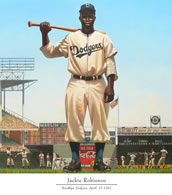
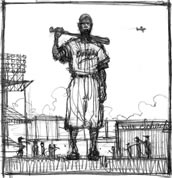
Barnes’ paintings celebrate the heights that the spirit of the group can achieve for its members. Nelson’s paintings extol what the individual can do for the progress of the group. Products of their times, they are casualties as well as beneficiaries of the conflict and progress of the moments in history into which each was born. The hero of a Nelson painting has for better and for worse, become indentified with that very American quest, the alienated striving of the individualist to overcome inner hurdles on the lonely way to the stars.
The silver lining in the cloudy skies is the transforming effect that sports well performed can have on its players and its audience. The spirit of the dedicated athlete has the potential to heal a community’s scars. The individual journey has the power to inspire millions. The stories painted and the portraits of history in Nelson’s paintings remind all of us to tap the power of the past and to reconnect with the traditional wisdom of the tribes of our origins. Nelson’s masterpieces of visual storytelling can launch viewers on many epic journeys of recovery and inspiration.
Key Sport Works & World Influence
Kadir Nelson – “Sport Art’s Contemporary Griot” – 2009 Sport Artist of the Year

Kadir Nelson is widely acclaimed for his memorable sport art, including portraits of individual players as well as teams, and for his award-winning book illustrations. His artworks are held in many public and private collections, museums, and galleries, several of which are listed below.
- International Olympic Committee
- American Sport Art Museum and Archives
-
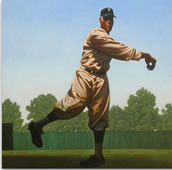
Smokey Joe Williams United States House of Representatives
- National Baseball Hall of Fame
- Westmont College
- Robert Breitbard Foundation
- Sears, Roebuck & Co.
- Negro League Baseball Museum
- Coca-Cola Corporation
- Dreamworks SKG
- San Diego Padres
- Eddie and Nicole Murphy
- Will and Jada Smith
- Kate and Steven Spielberg
-
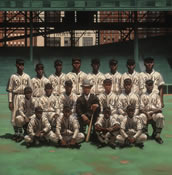
Homestead Grays Denzel and Pauletta Washington
- Spike and Tonya Lee
- Venus Williams
- Lil Kim
- Ice Cube
- Berry Gordy
- Shaquille O’Neal
- Sharon Stone
- Jamal Williams
- Daryl Strawberry
- Queen Latifah
- Geri Bauer
-
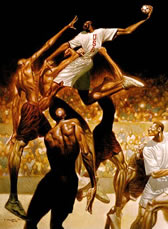
The Anatomy of Team Handball Antwone Fisher
- Djimon Hounsou
- Don Cheadle
- Dr. Eugene and Mrs. Roberta Thompson
- ArtPeace Gallery, 2317 West Magnolia Boulevard, Burbank, California 91506